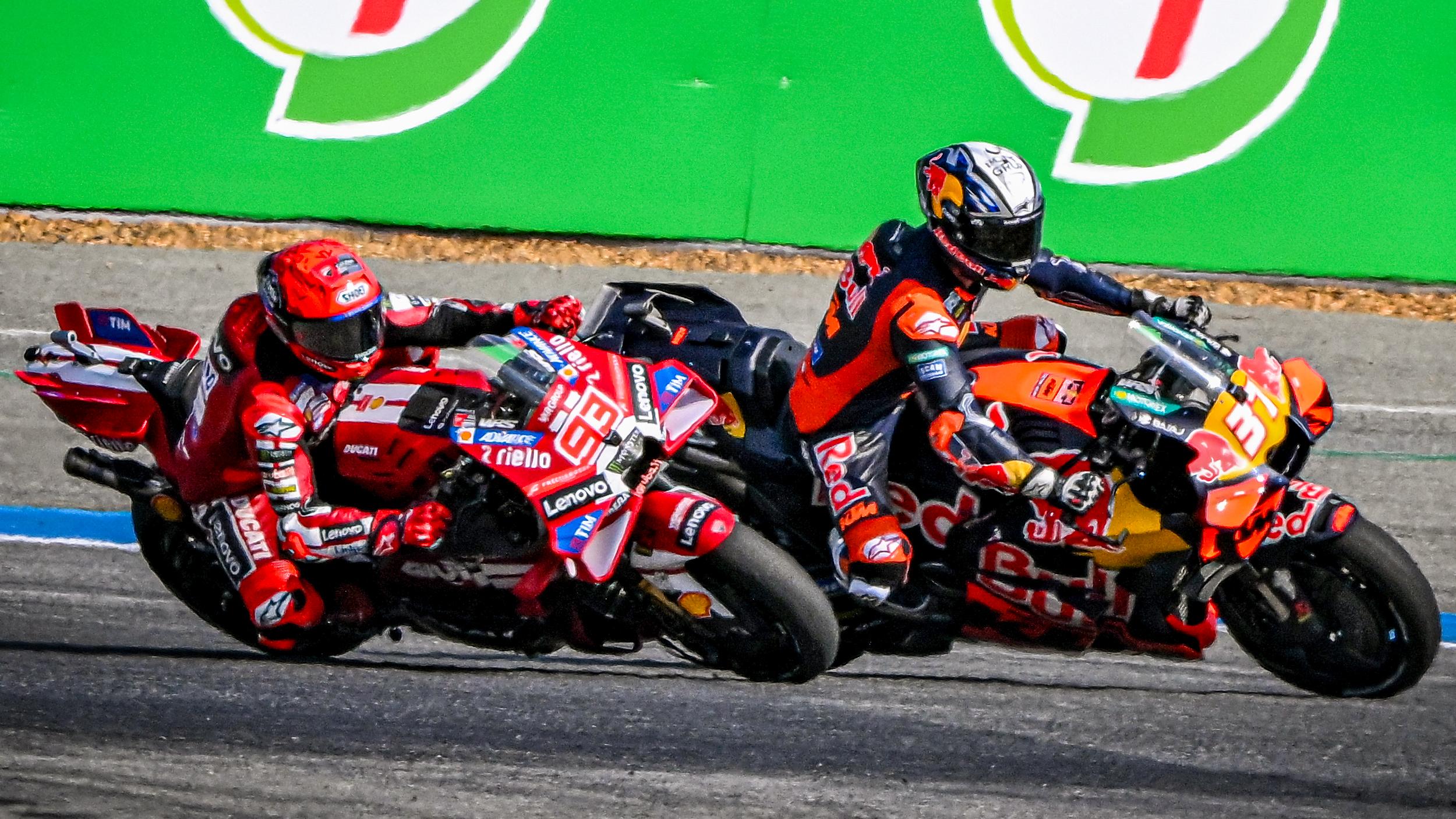
MotoGP Sprint Drama Unfolds: Pedro Acosta & Marc Marquez on Buriram Contact & Penalty
The Tissot Sprint race at Buriram was always going to be a spectacle, but few could have predicted the sheer intensity and subsequent controversy that would follow the checkered flag. At the heart of the storm were two titans of MotoGP: the formidable rookie
Pedro Acosta and the seasoned multi-time World Champion,
Marc Marquez. Their on-track duel culminated in a late-race contact, a penalty, and a flood of passionate reactions that left fans and pundits debating the very essence of competitive racing. The incident not only defined Acosta's maiden victory but also sparked a wider conversation about race control, rider etiquette, and the fine line between aggressive racing and an unfair advantage.
The Defining Moment: Contact and Controversy at Turn 12
The drama reached its crescendo on the penultimate lap of the Buriram Sprint. As the race neared its thrilling conclusion,
Pedro Acosta made a bold move on
Marc Marquez at Turn 12. What followed was a moment that would ignite fervent discussion: contact between the two riders. Initially, there were murmurs and even outright denials from some corners – notably Ducati Lenovo Team Manager Davide Tardozzi – about the presence of contact. However, both riders swiftly confirmed what the replays seemed to suggest: there was indeed a touch.
Acosta's succinct, "There was contact," coupled with his affirmative response to "Would you have done the same? Sure," painted a clear picture of an aggressive, high-stakes maneuver. The FIM MotoGP Stewards' subsequent report laid bare their findings, citing "causing contact with another rider when overtaking and gaining unfair advantage through it, resulting in a position change." This precise wording became the cornerstone of the ensuing penalty and the subject of considerable debate. The incident, broadcast from every angle, showcased the intense pressure and split-second decisions that define MotoGP, leaving an indelible mark on an already fiery Sprint.
Pedro Acosta's Bittersweet Victory: "He Let Me Pass?"
For
Pedro Acosta, the Buriram Sprint was meant to be a crowning achievement – his maiden victory in MotoGP. And while he did ultimately stand atop the podium, the circumstances surrounding his win introduced an unexpected layer of complexity and emotion. Reflecting on the contact and subsequent penalty to Marquez, Acosta admitted to a feeling that tempered his triumph. "Maybe I don't feel like a winner because he let me pass," he revealed in a post-race interview. This sentiment, candid and vulnerable, speaks volumes about a rider's internal code and the desire for an unequivocal win, earned through pure battle rather than a Steward's decision.
Despite this introspective reflection, Acosta's resilience and skill were undeniable throughout the race. He recounted his efforts to fight back after the incident, trying to regain lost time, acknowledging Marquez's late braking made moves difficult. "After our contact on the final lap, I wasn’t really believing. I was trying because I was quite fast in T3 and T4 and I was making back what I was losing in T1 and T2," he explained. His ultimate takeaway, however, remained positive: "Even without his penalty, we have to be happy with the job we’ve done and for the battle we were able to have." For a rookie to secure a first MotoGP victory, even under controversial circumstances, marks a brilliant start to his campaign, proving his mettle and speed. He emphasized his fundamental desire to "win the race battling for it, but anyway, you have to be there to get these things..." – a pragmatic acceptance of how racing unfolds.
Marc Marquez's Grievance: The Timing of Justice
On the other side of the controversy stood
Marc Marquez, whose reaction, while acknowledging the incident, primarily focused on the manner and timing of the Stewards' decision. Ever the strategist, Marquez admitted to "a small contact," but crucially added, "my bike was already half a bike in front, already from the entry." This detail underscores his argument that the move, from his perspective, was legitimate and well-progressed. However, his main grievance was not with the penalty itself, but with *when* it was communicated.
"That penalty, the message, arrives too late. Because it only arrived at the last corner," Marquez stated emphatically. He argued that if race control intended to enforce such strict rules, penalties should be delivered far sooner, allowing the penalized rider a chance to react and potentially regain their position. "If they want to have this system, if they want to be more strict, they need to send the penalty on the exit of T3. Don’t wait until the last corner." This perspective highlights a critical point about the functionality of race control in real-time, high-speed scenarios. A penalty issued so late, effectively at the race's conclusion, robs a rider of any opportunity for redress, making the decision feel definitive and unappealable in practical terms. For a more detailed look at Marquez's perspective on the penalty's timing, you can read
Marquez on Late Penalty: Was Acosta's First Win Tainted?
Marquez also delivered a powerful message beyond his immediate situation. Speaking to Sky Sports Italia, he challenged the wider rider community: "You riders have to speak up because this overtake was okay otherwise we’re going to watch you race in single file." This statement reflects a broader concern about the direction of racing, advocating for aggressive yet fair overtakes to preserve the spectacle of MotoGP. He maintained his personal integrity, adding, "I can’t do it today otherwise it’d look like I’m crying. I’ve never done it in my career and I won’t do it today. But I agree." This posture solidified his image as a fierce competitor who, while disagreeing with the outcome, chose to focus on the bigger picture of the sport's health. He teasingly concluded by assuring fans that his competitive "fire inside" was very much present, hinting at more exciting battles to come.
Analyzing the Stewards' Call: Fairness and Functionality
The FIM MotoGP Stewards' decision to penalize
Marc Marquez for "causing contact... and gaining unfair advantage... resulting in a position change" is a critical point of contention. Such rulings are inherently challenging, requiring officials to make split-second judgments in a sport where milliseconds and millimeters can dictate outcomes. The criteria cited by the Stewards are standard, aiming to maintain fair play and safety on track. However, the application and timing of such penalties can drastically alter the perception of justice.
The crux of the matter, as highlighted by Marquez, lies in the *efficacy* of a late penalty. While the Stewards might have needed time to review the incident thoroughly, delivering the verdict literally at the last corner effectively pre-determined the final result without allowing for any on-track resolution from the penalized party. This raises questions about the balance between meticulous investigation and maintaining the integrity of the live race flow. If penalties are meant to be corrective, then providing an opportunity for a rider to rectify their position (e.g., dropping back and then fighting to regain) is paramount. Without this, a penalty can feel less like a correction and more like a post-race re-shuffling of results. This incident at Buriram provides a valuable case study for race control in balancing thoroughness with timely intervention. For a deeper dive into the specifics of the penalty and its implications, check out
Acosta vs. Marquez: Unpacking MotoGP's Controversial Buriram Penalty.
The Ripple Effect: Beyond Buriram
The
Pedro Acosta Marquez clash at Buriram is more than just an isolated incident; it's a moment that will resonate through the MotoGP season and beyond. For Acosta, while the maiden win is a landmark, the surrounding controversy undeniably taints the pure joy of achieving such a milestone. It's a reminder of the psychological toll that complex race outcomes can have on riders, even in victory. For Marquez, the incident, coupled with his strong stance on the penalty's timing, further solidifies his reputation as a fiercely competitive rider who isn't afraid to speak his mind for the betterment of the sport. His fiery spirit, promised for Sunday, is exactly what fans crave.
This drama also serves as a potent reminder of the fine line between aggressive, thrilling racing and actions deemed to gain an "unfair advantage." It fuels the ongoing debate among fans about what constitutes acceptable contact, what defines a clean overtake, and how race control can best foster competitive racing while ensuring safety and fairness. The Buriram Sprint, therefore, wasn't just a race; it was a conversation starter, an indicator of the intense rivalry developing between *Pedro Acosta Marquez*, and a testament to the captivating drama that only MotoGP can deliver. Future encounters between these two will undoubtedly be watched with bated breath, as the echoes of Buriram continue to reverberate.
The Buriram Sprint delivered an unforgettable blend of high-octane racing, daring overtakes, and a dramatic post-race twist involving
Pedro Acosta and
Marc Marquez. While Acosta secured a historic first win, his reflection on the circumstances highlights the nuanced emotions of victory. Marquez, ever the competitor, used the moment to advocate for greater clarity and timeliness in Stewards' decisions, emphasizing the need for robust, wheel-to-wheel racing. This incident serves as a powerful reminder of the inherent complexities in motorsport: the thrill of battle, the pressure of official rulings, and the passionate reactions they provoke, all contributing to the rich tapestry of MotoGP.