The Buriram Battleground: Unpacking the Pedro Acosta Marquez Penalty Drama
The exhilarating world of MotoGP rarely disappoints when it comes to on-track fireworks, but the Buriram Sprint race delivered a spectacle that transcured mere excitement, sparking a heated debate that reverberated far beyond the finish line. At the heart of the storm was a late-race clash between two titans of different generations: the seasoned multi-world champion Marc Marquez and the phenomenal rookie, Pedro Acosta. The incident, culminating in a controversial penalty against Marquez, left fans, riders, and pundits questioning the very essence of competitive racing. Was Pedro Acosta's maiden MotoGP victory truly deserved, or was it tainted by the stewards' intervention? And what did Marc Marquez have to say about being robbed of a win in the dying moments?
The Defining Moment: Contact, Penalty, and Confusion
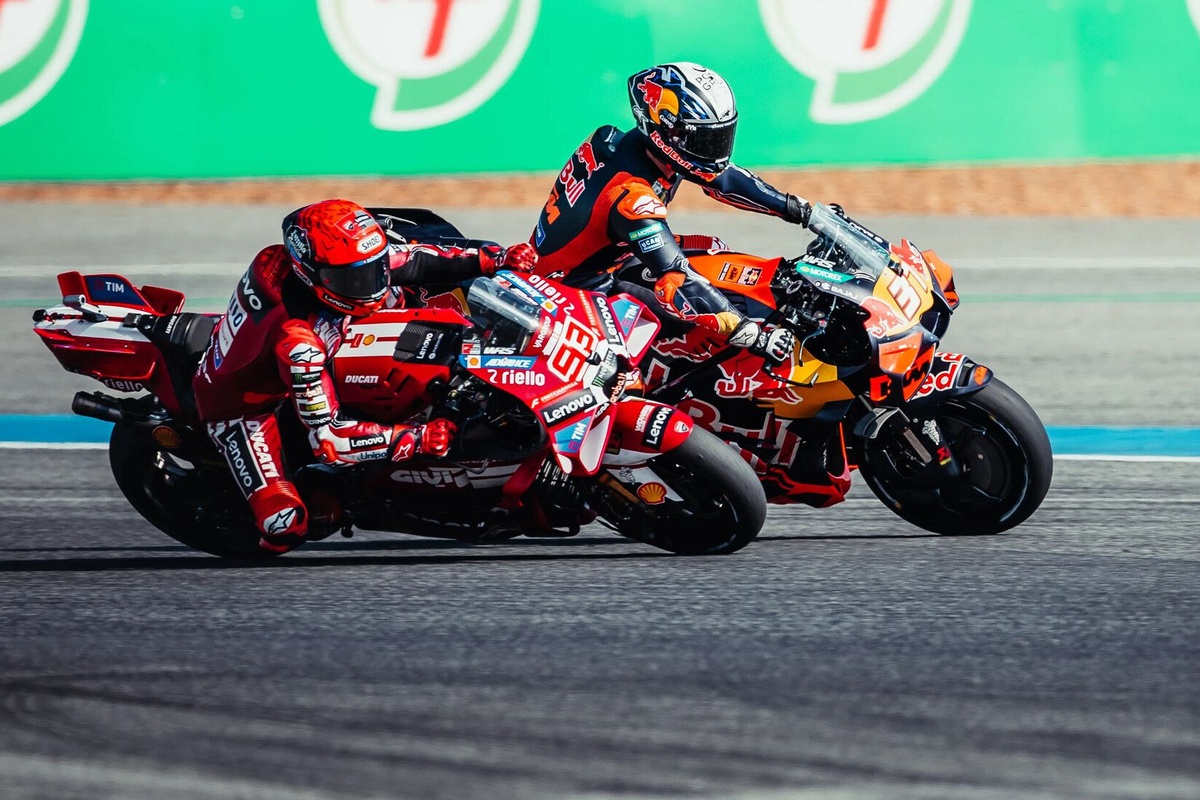
The Buriram Sprint was a masterclass in aggressive, no-holds-barred racing, with Acosta vs. Marquez: Unpacking MotoGP's Controversial Buriram Penalty at its epicenter. The defining moment arrived on the penultimate lap at Turn 12. Marc Marquez, demonstrating his characteristic late-braking prowess, launched an audacious overtake on Pedro Acosta. Both riders confirmed there was contact – a minor touch, but contact nonetheless. While Ducati Team Manager Davide Tardozzi initially suggested otherwise, the riders' own admissions solidified the narrative.
The FIM MotoGP Stewards swiftly intervened, issuing a penalty to Marquez for "causing contact with another rider when overtaking and gaining unfair advantage through it, resulting in a position change." This ruling demoted Marquez, elevating Acosta to the top step of the podium for his first-ever MotoGP win. However, the timing of this decision became the primary point of contention, overshadowing the contact itself. The penalty notification arrived at the absolute last corner of the Sprint, effectively denying Marquez any opportunity to react or regain the lost position.
For a detailed breakdown of the incident and the stewards' reasoning, you might find our article Acosta vs. Marquez: Unpacking MotoGP's Controversial Buriram Penalty particularly insightful.
Acosta's Bittersweet Maiden Victory: A Tainted Triumph?
For Pedro Acosta, securing a maiden MotoGP victory should have been an unadulterated moment of pure joy and triumph. Yet, the circumstances surrounding his win in Buriram cast a long, albeit minor, shadow. In his post-race interview, the young Spaniard candidly admitted, "maybe I don't feel like a winner because he let me pass." This striking honesty revealed the psychological toll of winning under such contentious conditions. While happy with the "job we've done and for the battle we were able to have," Acosta’s desire to win by battling on track, rather than through a steward's decision, was clear. He articulated his longing to "win the race battling for it," acknowledging that sometimes "you have to be there to get these things."
This sentiment highlights a common dilemma in competitive sports: the desire for an undisputed, earned victory versus one granted by external intervention. For a rookie like Acosta, whose career trajectory is already astronomical, this moment was undoubtedly a significant milestone. However, the whispers of a "tainted win" persist, not due to any fault of his own, but purely because of the controversial timing of the penalty. It's a testament to Acosta's sporting integrity that he voiced these feelings, adding another layer of complexity to an already dramatic incident. This perspective offers a unique insight into the mindset of a burgeoning champion, hungry for success but equally appreciative of genuine, hard-fought victories.
Marquez's Fury: The Timing is Everything
Marc Marquez, a rider known for his calculated aggression and unparalleled skill, was, understandably, less than pleased with the outcome. While he conceded that there was "a small contact," his primary grievance was not with the penalty itself but with its MotoGP Sprint Drama: Acosta & Marquez on Buriram Contact & Penalty. Marquez vehemently argued that the notification arrived "too late." In his view, if the stewards intended to be strict, the penalty should have been communicated much earlier in the lap—perhaps "on the exit of T3"—allowing him a fair chance to fight back or even attempt to drop a position and then try to regain it. The late timing, he felt, effectively "robbed him the chance to fight back after dropping a position," eliminating any strategic response.
Beyond the immediate incident, Marquez voiced a broader concern that resonated deeply within the rider community. On Sky Sports Italia, he delivered a less nuanced, more impassioned statement: "You riders have to speak up because this overtake was okay otherwise we're going to watch you race in single file." He clarified that he couldn't personally "cry" about it, maintaining his career-long stance against public complaints, but firmly agreed with the sentiment that the move was within acceptable racing limits. This wasn't just about a lost win; it was about the precedent being set for future overtakes and the very nature of competitive MotoGP racing. Marquez's comments highlight the ongoing tension between ensuring rider safety and preserving the exhilarating spectacle of close-quarters racing, a balance that stewards constantly grapple with.
The Broader Implications: Navigating the Future of MotoGP Stewarding
The Buriram Sprint incident, featuring the intense battle between Pedro Acosta and Marc Marquez, extends beyond a mere race result; it ignites critical questions about the direction of MotoGP stewarding and its impact on rider conduct. The controversy has brought several key issues to the forefront:
- Consistency in Penalties: Riders and fans alike often yearn for greater consistency in how contact incidents are judged. What constitutes "fair" contact versus "unfair advantage" remains a subjective grey area that could benefit from clearer guidelines or more transparent decision-making processes.
- The Role of Timing: As Marquez powerfully articulated, the timing of a penalty can be as impactful as the penalty itself. Issuing a penalty at the very last corner deprives a rider of the opportunity to mitigate the consequence, fundamentally altering the race outcome without allowing for further on-track competition. This raises the question of whether a system could be implemented for earlier, provisional warnings or decisions.
- Preserving the Spectacle: Marquez's fear of "racing in single file" underscores a genuine concern within the sport. MotoGP thrives on aggressive, wheel-to-wheel action. Overly strict interpretations of contact rules, without considering the dynamic nature of racing at such high speeds, risk sanitizing the sport and diminishing its excitement. Stewards face the challenging task of balancing rider safety—a paramount concern—with the desire to maintain the exhilarating close-quarters racing that captivates millions.
- Rider Agency and Strategy: Penalties, especially late ones, remove agency from the riders. Part of MotoGP's appeal is watching riders make split-second strategic decisions under pressure. If penalties negate the chance for a tactical response, it changes the fundamental competitive dynamic.
Practical advice for stewards moving forward might include leveraging real-time telemetry and multiple camera angles for quicker, albeit equally thorough, reviews to allow for earlier notification. For riders, it reinforces the delicate tightrope walk between pushing the limits and staying within the ever-evolving boundaries set by the rulebook. The intense rivalry between MotoGP Sprint Drama: Acosta & Marquez on Buriram Contact & Penalty will surely continue to be a highlight of the season.
Conclusion
The Buriram Sprint race delivered a memorable clash between Pedro Acosta and Marc Marquez, culminating in a penalty that sparked widespread debate. While Pedro Acosta secured his maiden MotoGP victory, the manner of the win left him with a bittersweet taste, highlighting his desire for an unadulterated, hard-fought triumph. Marc Marquez, conversely, focused his frustration not on the contact itself, which he deemed acceptable, but on the penalty's late timing, which he felt robbed him of a chance to fight back. This incident serves as a powerful reminder of the fine line between aggressive racing and punishable contact, and the ongoing challenge for MotoGP stewards to balance safety, fairness, and the preservation of the sport's thrilling spectacle. As the season progresses, all eyes will be on how these lessons influence future race decisions and the evolving dynamics between riders and officialdom in the fastest show on two wheels.